Two Kazakh films are being screened at Imagine this year – a first! Kazakhstan is the eighth-largest country in the world. The Netherlands could fit into it almost 70 times over. But the two countries also have something in common: just as Dutch cinema is virtually unknown in Kazakhstan, so too is Kazakh cinema in the Netherlands.
Sandwiched between Russia and China, the country lay for a long time within the Soviet Union’s sphere of influence. During the Second World War, the Russians relocated their major film studios in Moscow and Leningrad to the (then) capital, Alma-Ata, in the far south-east of the country. Eisenstein’s Ivan the Terrible, for example, was filmed there. After the war, the Russians retained their influence. No film was made without incorporating some element of communist ideology. After Kazakhstan gained independence in 1991, directors were able to operate more freely, although distributors preferred to play it safe with Hollywood blockbusters rather than screen local productions. That was until a commercial director, born and raised in Kazakhstan, broke the deadlock. With Night Watch (2004) and Day Watch (2006) – both financed with Russian money by the way – Timor Bekmambetov made a name for himself internationally. These days, the director and producer divides his time between Hollywood and Russia.
One key figure is Adilkhan Yerzhanov, who has completed no fewer than nineteen (!) feature films over the past twelve years.
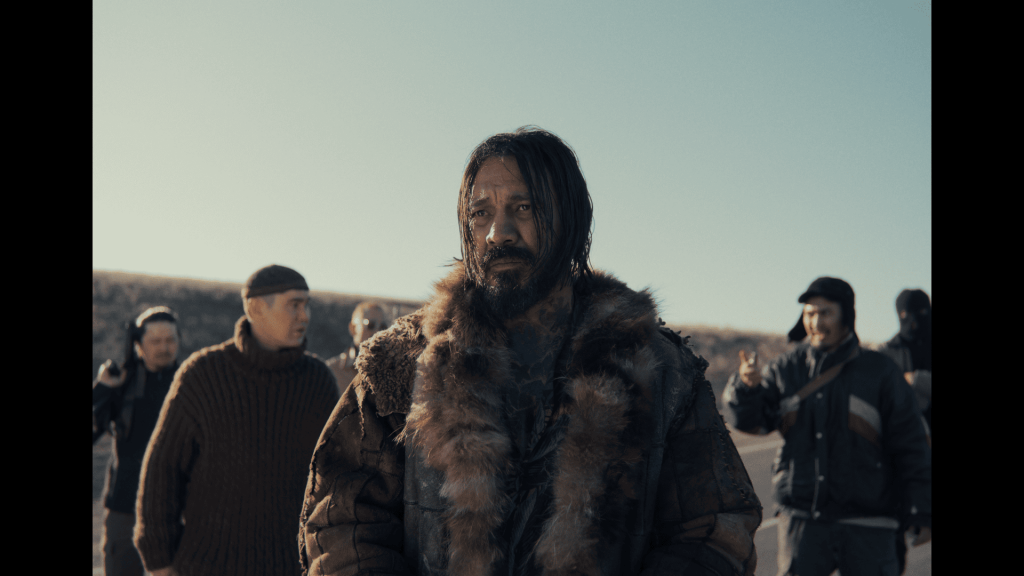
But there is now also a fair amount of activity in the genre scene in his home country. One key figure is Adilkhan Yerzhanov, who has completed no fewer than nineteen (!) feature films over the past twelve years. A true auteur, he has created a brutal universe centred on the fictional town of Karatas, set in the steppes. Yerzhanov likes to let the plot meander leisurely before striking with a fierce outburst of violence. The tone is dryly comic, verging on the absurd. The characters are archetypes of good and evil. Or something in between, such as the protagonist Bek from the neo-western Turgaud, screening at Imagine this year – a bodyguard wrestling with his conscience whilst in the service of a gang lord. Yerzhanov’s love of cinema – from Melville to Tarantino to Park Chan-wook – shines through everything.
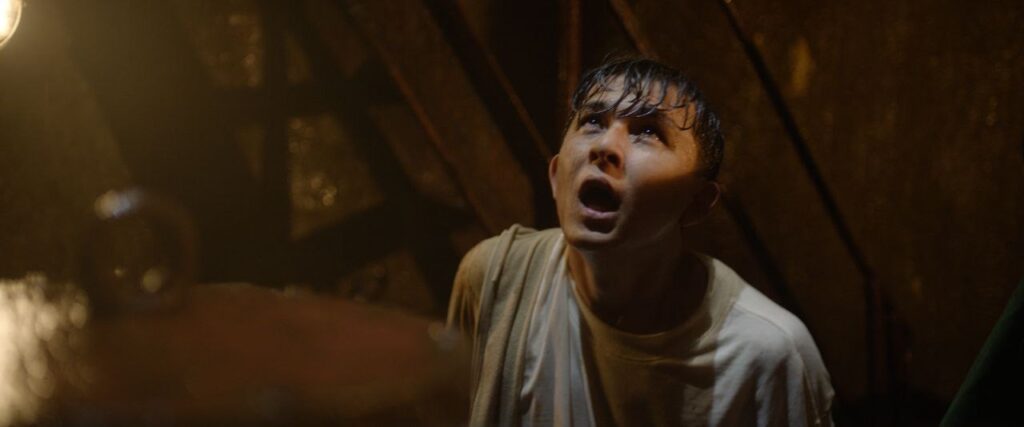
Qaitadan is the first Kazakh disaster film
Far less sombre is Qaitadan, the second Kazakh film at Imagine this year, proudly billed as the first Kazakh disaster film, with a screenplay loosely based on a real-life dam breach in 2010. But more striking is the time-loop structure, which was undoubtedly borrowed from Groundhog Day. The protagonist, Ruan, wakes up every morning on the same day, but is able to glimpse a little further into the near future, in which the village will be swept off the face of the earth. Naturally, his panicked warnings are initially dismissed as nonsense.
Debut director Duman Erkimbek effortlessly complements the suspense with humour, romance and a pinch of social commentary. Whether Erkimbek will remain within the fantasy genre remains to be seen – his new film is, after all, a genuine romantic comedy. Fortunately, for edgy genre films, we can rely on the tireless Yerzhanov, who this year also wrote the screenplay for the horror-fantasy film Hell Grind, generated entirely by AI.
Turgaud and Qaitadan are both showing on 5 November. Check the programme for screening times and tickets.
Article by Phil van Tongeren